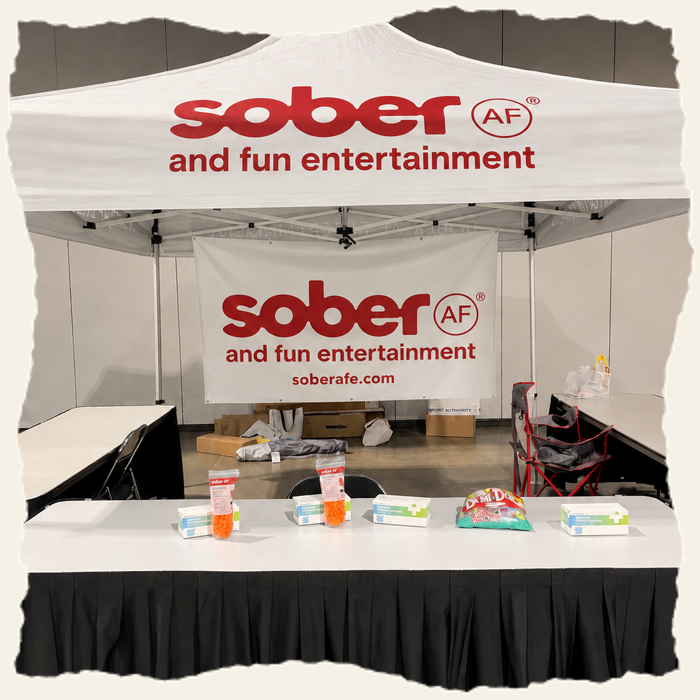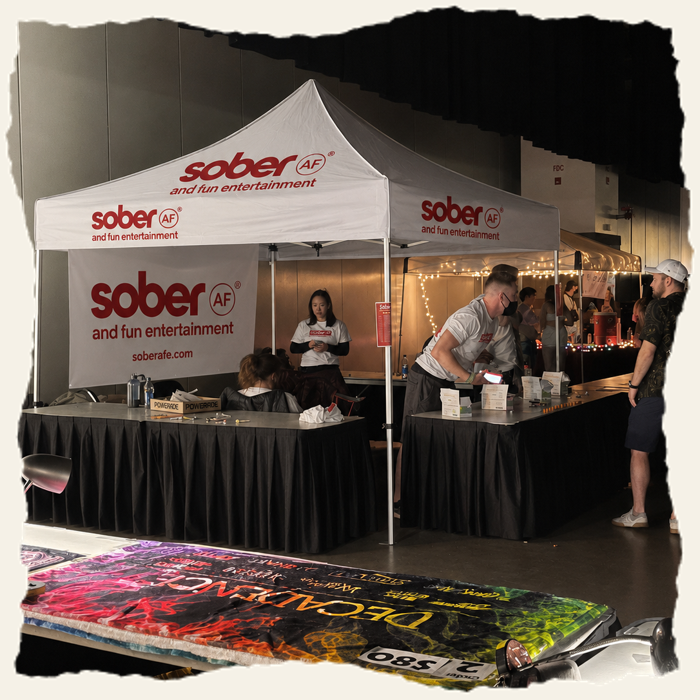

Where This Conversation Lives
Music festivals, concerts, and nightlife spaces exist for connection, release, and joy. They are places where people gather to feel something together; to move, to celebrate, to escape the weight of daily life.
But these environments also concentrate risk.

At Sober AF, we work in spaces where substance use intersects with rapidly changing substance cultures. The presence of fentanyl and other synthetic adulterants has altered the landscape entirely.[¹] What once felt predictable is no longer so. Substances people believe to be familiar now carry unpredictable and sometimes fatal consequences.[²]
To respond effectively, we need more than warnings or enforcement. We need understanding—especially of what addiction is, and what it is not.
From a Single Lens to a Prism of Perspective
Addiction is often discussed as a singular problem with a singular cause. This narrow frame makes it easier to assign blame, but harder to reduce harm.
A more accurate way to understand addiction is through a prism of perspective. Like light passing through glass, one experience is separated into multiple visible components. Each part looks different, but all belongs to the same source.

Addiction is not one thing. It is an interaction between the body, the mind, and the environment; each influencing the others in real time.[³]
Recognizing this complexity is essential in an age where addiction is more of a risk than ever, but compounded threats such as the opioid crisis make it so there isn't even time to get addicted.
The Story We’ve Been Telling About Addiction
Culturally, addiction is often held at arm’s length. It is described in terms that emphasize personal weakness, poor choices, or lack of discipline. This distance allows addiction to remain abstract; something that happens to “other people.”
This framing has consequences.
When addiction is reduced to a character flaw, public responses prioritize punishment and exclusion rather than care. In nightlife and festival settings, this translates into silence, fear, and delayed response; conditions that are especially dangerous when thinking about the risks of opioid overdoses.[¹]
To move forward, we must correct a foundational misunderstanding: addiction is not a single condition, but a spectrum with distinct and overlapping components.
Physical Dependency: The Body Adapts
On a neurobiological level, the human body is designed to adapt to its chemical environment. Repeated exposure to substances alters baseline functioning, leading to tolerance and dependence.[³]
Over time, the body establishes a new state of equilibrium in which the presence of a substance is required to maintain stability. When that substance is removed, withdrawal occurs—a physiological reaction, not a moral one.

In the context of opioids such as fentanyl, this process has become far more dangerous. Synthetic opioids are significantly more potent, act more quickly, and are increasingly found in substances not traditionally associated with opioids.[²] This means physical dependence can develop faster and unintentionally, often without the user’s awareness.
Behavioral Addiction: The Mind Seeks Stability
Alongside physical dependency, addiction also operates on a psychological level.
Behavioral addiction is not driven by chemical necessity but by coping. Substance use becomes a way to regulate emotion, escape stress, or temporarily soothe psychological discomfort. These patterns often develop in response to trauma, instability, or chronic stress.
Clinically, these behaviors are described as maladaptive coping strategies: attempts to manage distress that ultimately increase harm.
In social environments where substance use is normalized, behavioral addiction can remain invisible. The behavior blends into the setting, even as the underlying need intensifies, leaving the underlying pain in repressed silence.
Why Distinction Matters
Physical dependency and behavioral addiction are not separate disorders. They are dimensions of the same experience, expressed variantly across individuals and contexts.
If we focus only on chemistry, we miss the emotional drivers. If we focus only on behavior, we miss the biological realities—especially in a synthetically saturated drug supply.
Returning to the prism metaphor: the colors differ, but the light remains the same.
Effective harm reduction depends on acknowledging both dimensions at once.
Addiction in the Era of HighGrade Synthetic Opioids
The opioid crisis has exposed the limits of outdated thinking about addiction.
People are not overdosing because they lack information or intention. Many overdoses occur because substances are stronger, more unpredictable, and more contaminated than ever before.²][⁴] The margin for error has disappeared.
In this environment, stigma does not prevent drug use—it prevents safety.
Harm reduction tools such as fentanyl test strips, Narcan distribution, and peer education exist not to encourage substance use, but to respond to reality. They acknowledge that people deserve safety even when risk is present.[¹]
Why Harm Reduction Belongs in Music and Nightlife Spaces
Nightlife environments are not peripheral to the opioid crisis and addiction—they are part of it.
Highdensity social spaces amplify both connection and risk. They are also places where timely intervention can mean the difference between life and death.
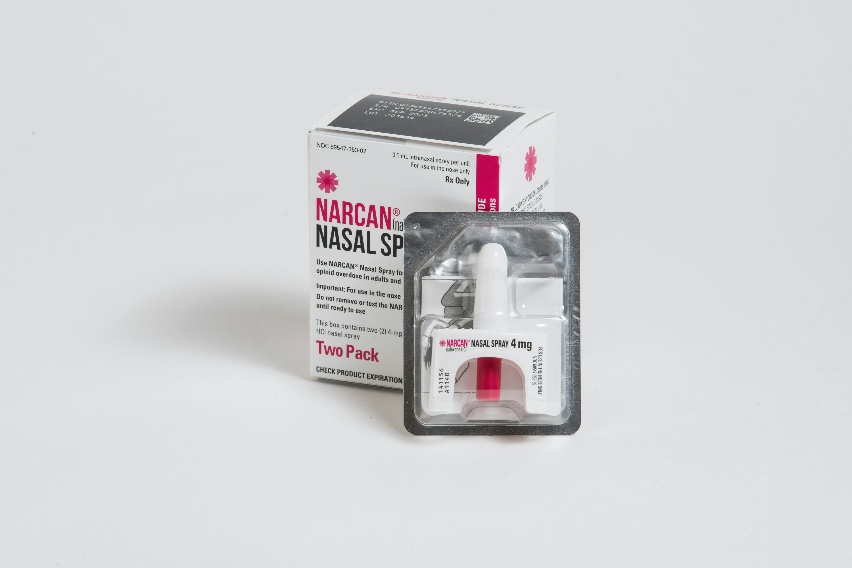
At Sober AF, our work is grounded in the belief that care should be accessible where people already are. Harm reduction in these settings is not about control or surveillance; it is about presence, education, immediate response, and most importantly connection.
When peers are equipped with the right tools and information, harm is reduced not through fear, but through trust.
Closing: Toward Understanding Instead of Distance
Addiction is not a failure of character. It is a complex response to pain, instability, and an increasingly dangerous substance landscape.
If we continue to approach addiction with distance and judgment, we leave people vulnerable in moments when they need care the most. If we widen our perspective, seeing addiction as both physical and behavioral, we create space for responses that actually save lives.

Harm reduction and community building is not an abstraction of the problem. It is a practical, compassionate response to the world as it is.
And in this stage, it is no longer optional — but vital.
Footnotes
[1] U.S. Department of Health & Human Services – Harm Reduction
https://www.hhs.gov/overdose-prevention/harm-reduction (hhs.gov in Bing)
[2] CDC – Fentanyl: Overdose Prevention & Drug Supply Contamination
https://www.cdc.gov/stopoverdose/fentanyl/index.html (cdc.gov in Bing)
[3] National Institute on Drug Abuse – Addiction Science
https://nida.nih.gov/research-topics/addiction-science (nida.nih.gov in Bing)
[4] Brookings Institution – Harm Reduction Strategies for the Fentanyl Crisis
https://www.brookings.edu/articles/harm-reduction-strategies-to-tackle-the-fentanyl-crisis/ (brookings.edu in Bing)